
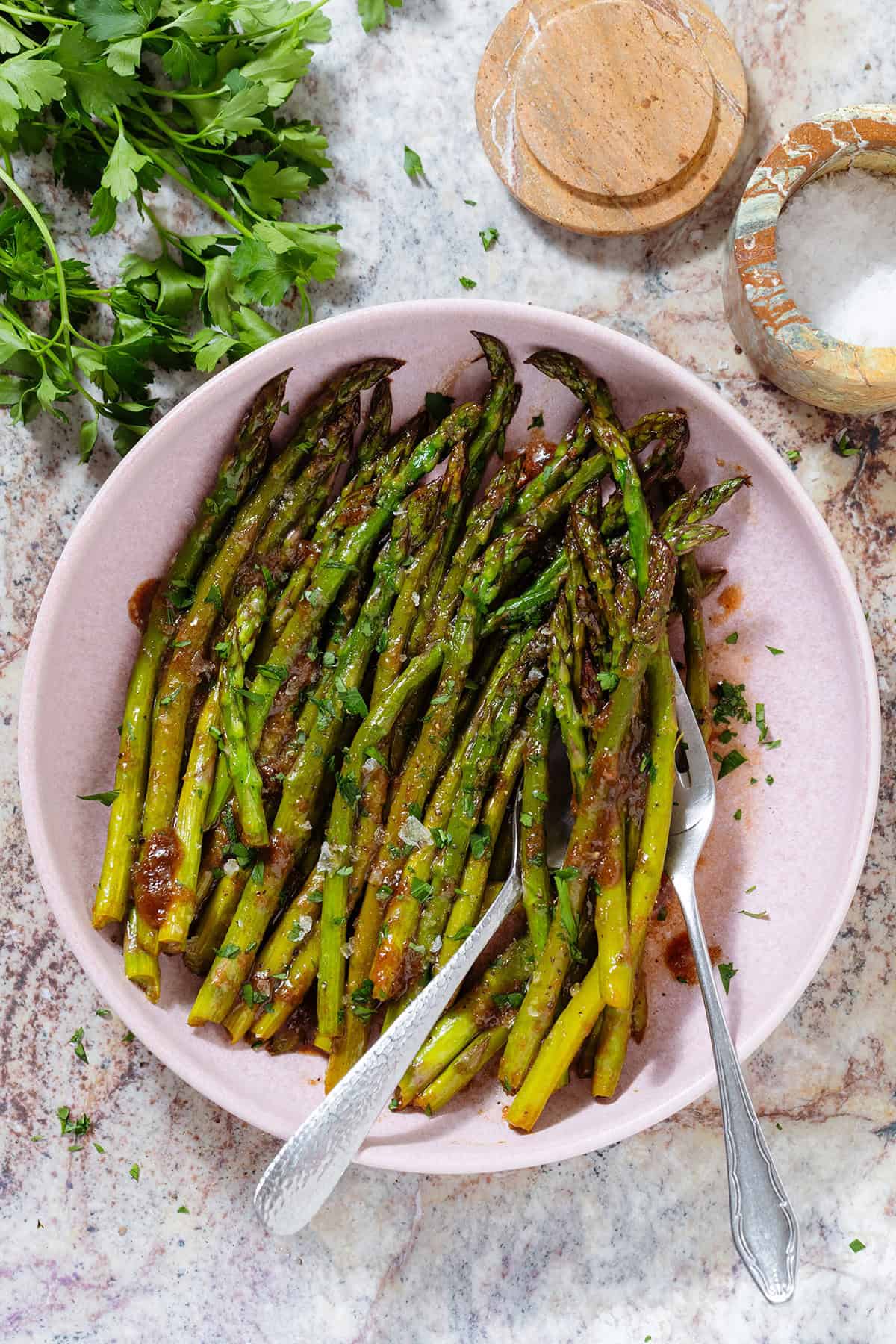
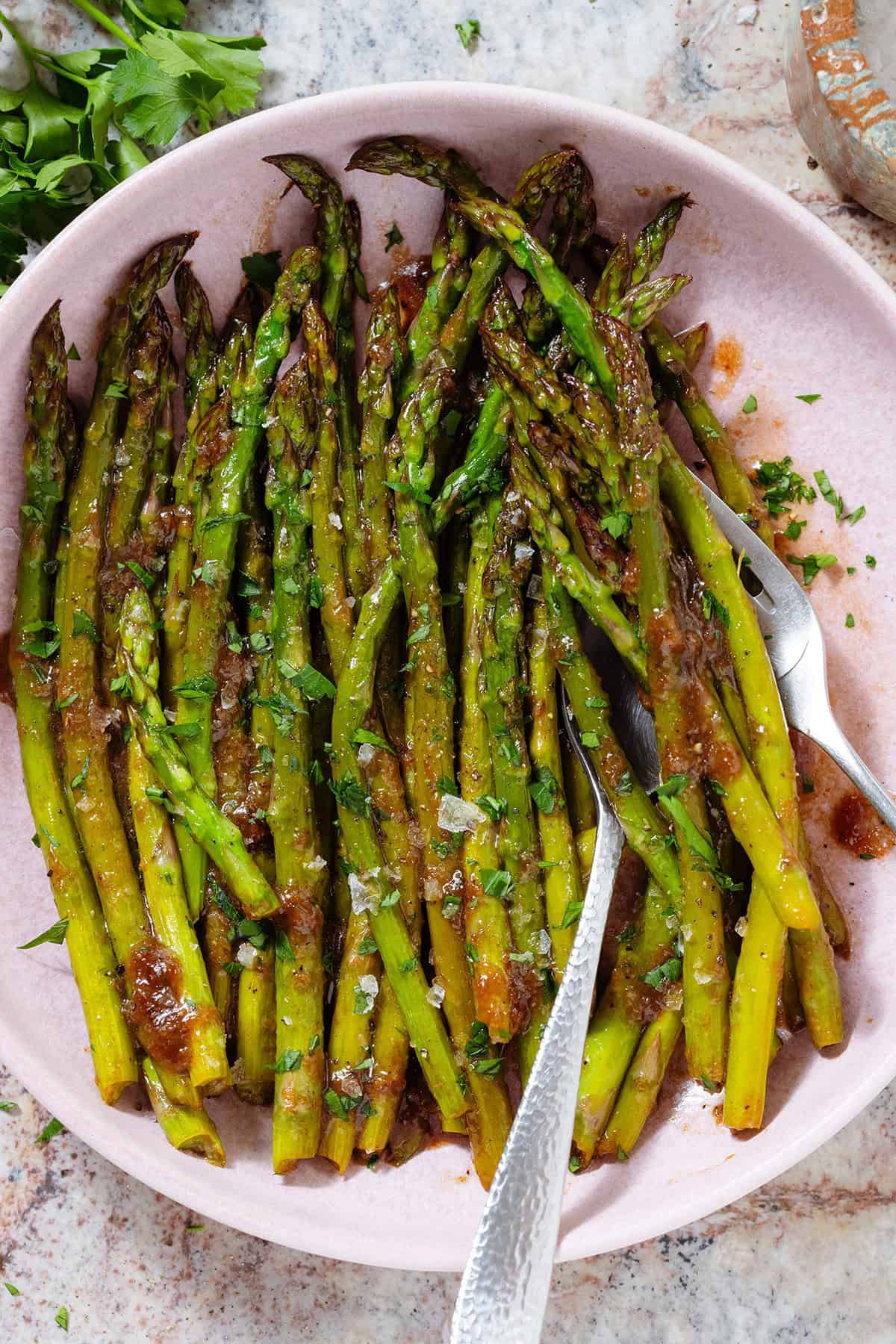
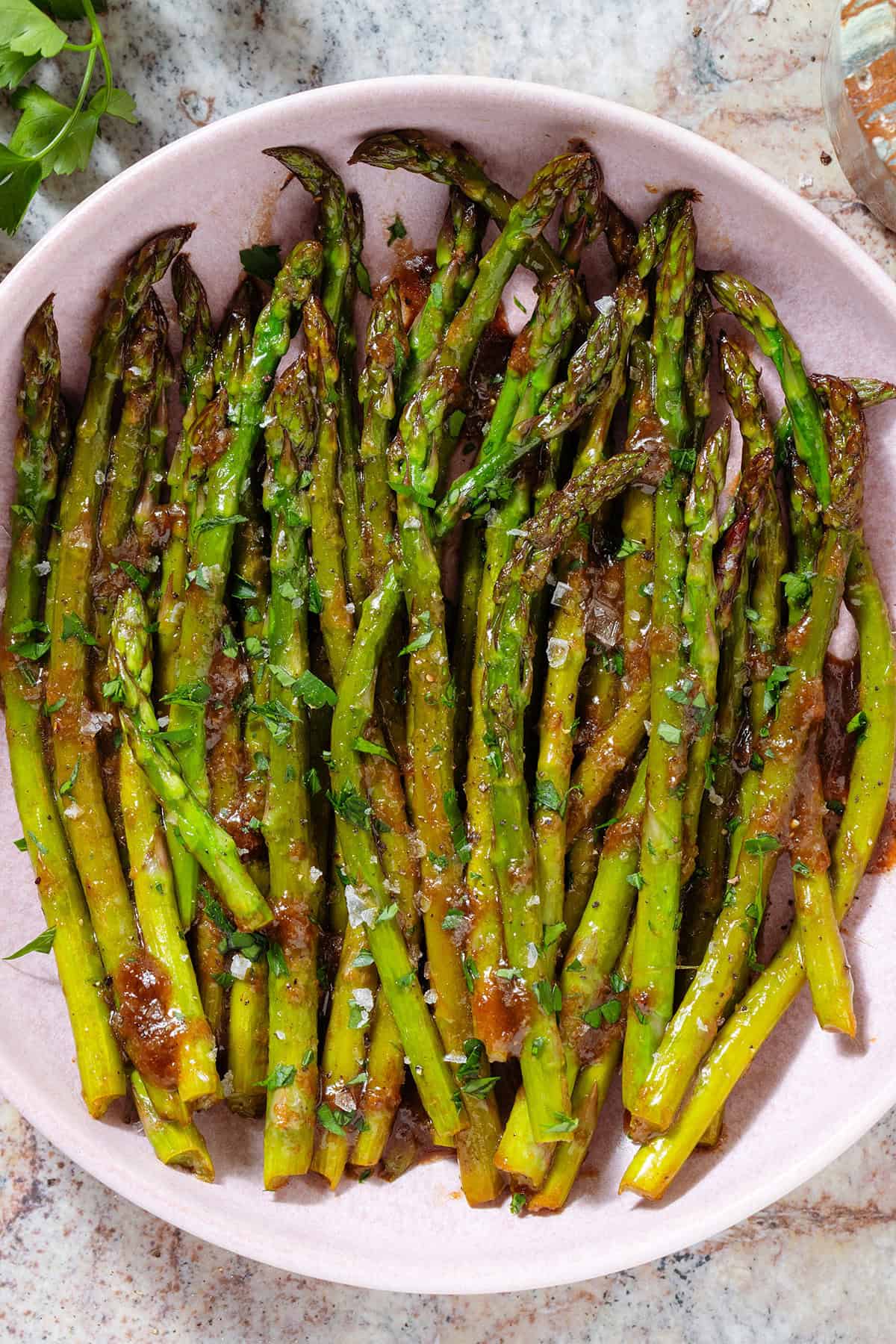
This Balsamic Glazed Asparagus is sauteed in a pan and tossed with the most delicious garlicky honey balsamic sauce! It's so easy to make and goes with practically any meal! It's such a great vegetarian side for spring and summer, and it can easily be made vegan as well.
Jump to:
Why You'll Love This Balsamic Glazed Asparagus
Simple but delicious - The flavors of the sauce are very simple but so good! It's a mix of balsamic vinegar, olive oil, honey, and garlic. It's inspired by my Honey Balsamic Brussels Sprouts. The ingredients are almost the same, but it's made on the stove instead of the oven.
No oven - What I like most about this glazed asparagus is that it's made in a pan on the stovetop, not in the oven. This is perfect for the summer when you don't want to turn on your oven because it's already so hot outside. It's also easier to keep an eye on it so it doesn't overcook and become too soft.
It goes with everything - You can serve the asparagus with anything from roasted or grilled chicken to steak, fish, or seafood. It's delicious served in combination with other sides or salads, but you can also chop it up and add it to salads or bowls (try it with quinoa!), which is perfect if you have leftovers.
Ingredients
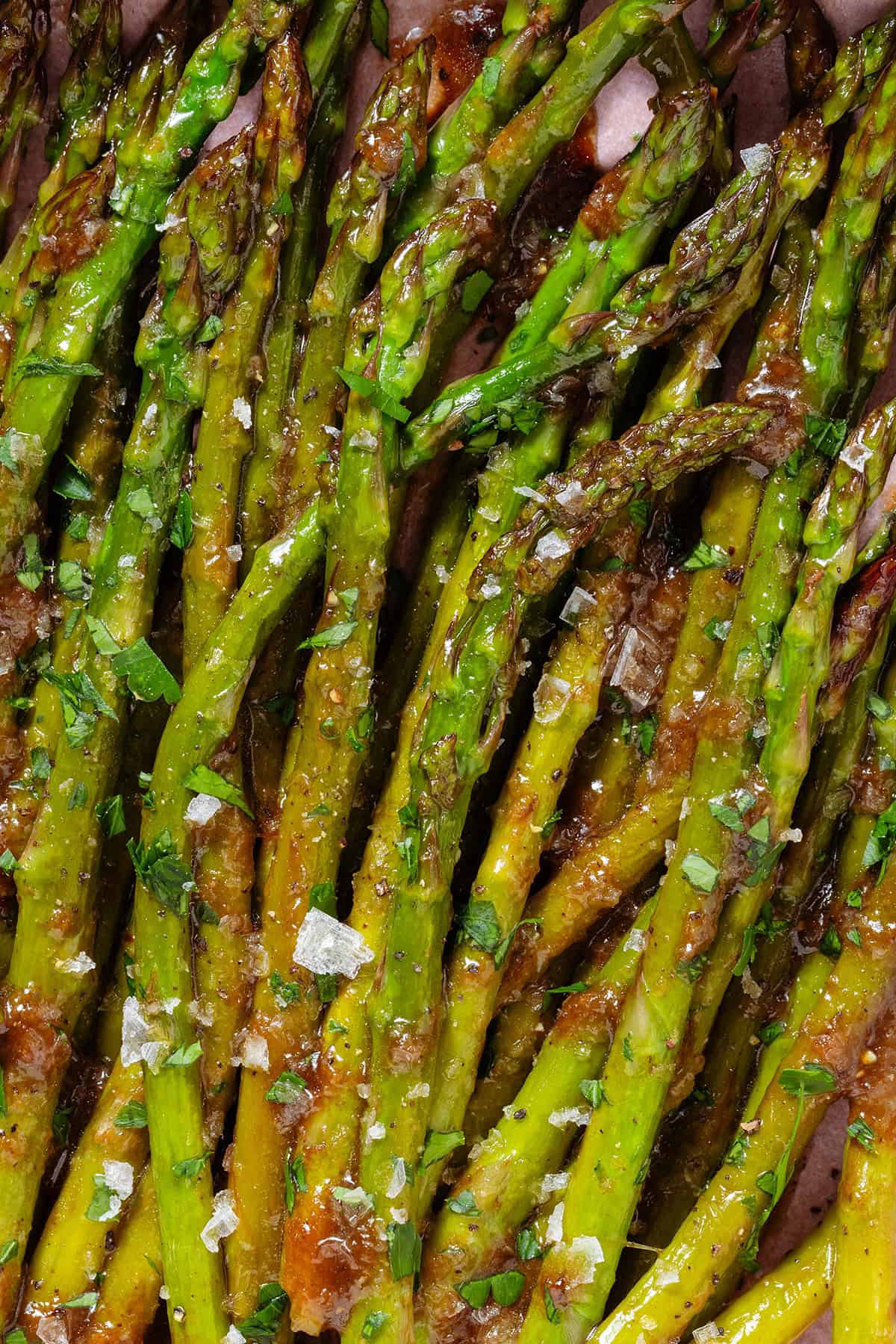
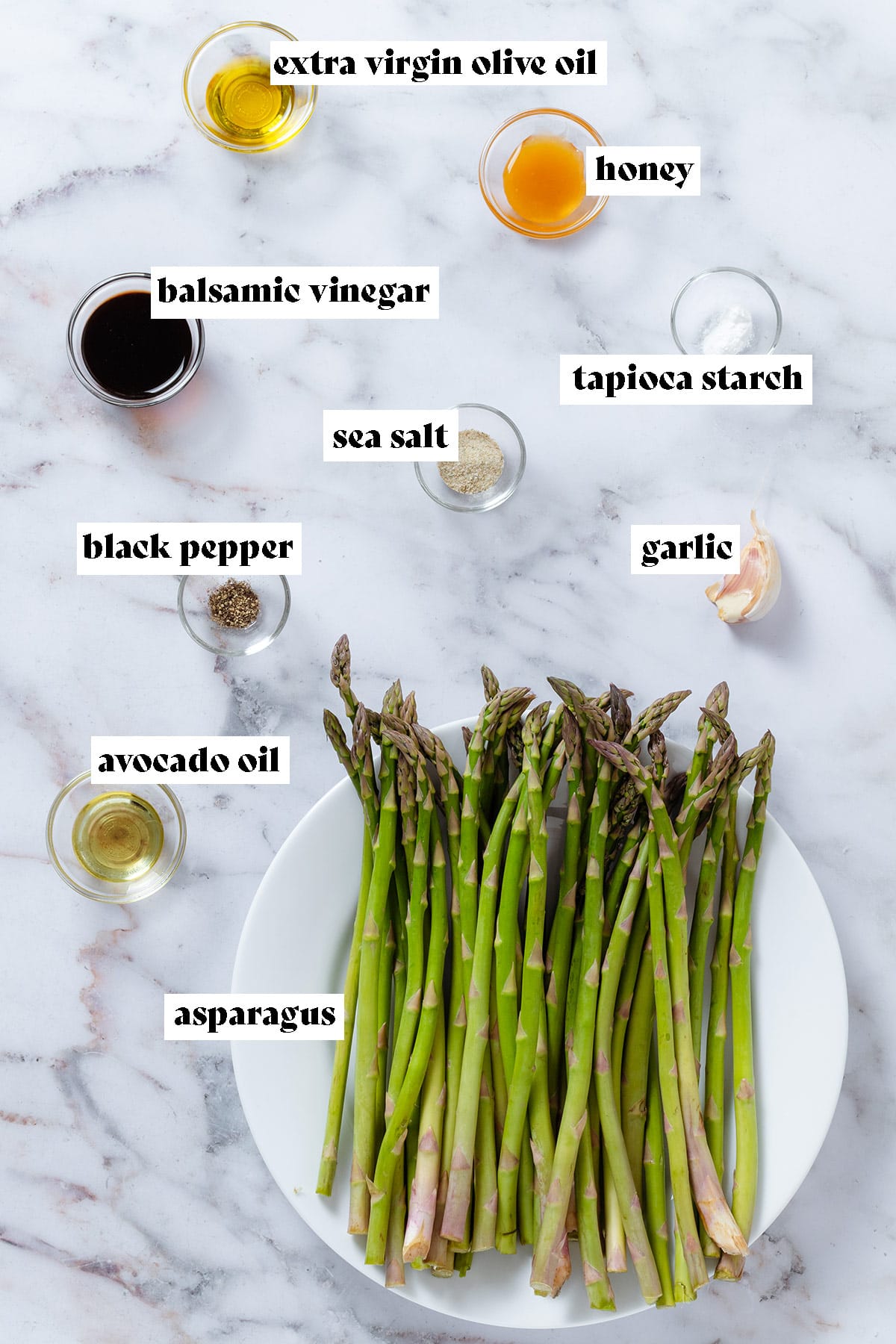
- Asparagus - Look for bright green, firm asparagus spears without any visible yellow or dark spots that aren't visibly wilted on top. If they're a little softer, you can revive them by storing them like flowers in a glass of water in the fridge.
- Avocado oil - I use refined pure avocado oil for most of my cooking because it's flavorless and it has a high smoke point. You can use any similar cooking oil you'd normally use, like refined olive oil or sunflower oil.
- Balsamic glaze - You'll need extra virgin olive oil, balsamic vinegar, honey, garlic, fine sea salt, and freshly ground black pepper. Make sure you're using balsamic vinegar, NOT balsamic glaze.
- Garlic - The recipe calls for grated or minced garlic for the balsamic glaze, but you can always use garlic powder instead if you prefer or you don't have any fresh garlic.
- Tapioca starch - You can use tapioca, arrowroot, or corn starch interchangeably. It gets mixed with water to create a starch slurry that you'll whisk into the sauce. It will thicken the sauce as it cooks, which helps it to stick to the asparagus better.
Variations and Substitutions
- Balsamic glaze - If you don't want to make the sauce, technically, you can just drizzle the cooked asparagus with store-bought balsamic glaze. I do recommend the homemade sauce, though, because it has all the added flavor from olive oil, garlic, and honey!
- Maple syrup - If you want to make the recipe vegan, use maple syrup instead of honey.
- Parmesan or pecorino cheese - Sprinkle the asparagus with grated parmesan right before serving to add some saltiness and extra flavor.
Step-by-Step Instructions
- Snap off the woody ends of the asparagus by holding one at both ends and bending it. It will snap where the woody part stops.
- Add the asparagus and avocado oil to a large saucepan over medium heat and cook for 5 minutes, tossing occasionally.
- Add a splash of hot water (cold water will make the oil splatter a lot more) and continue cooking for another 5 minutes.
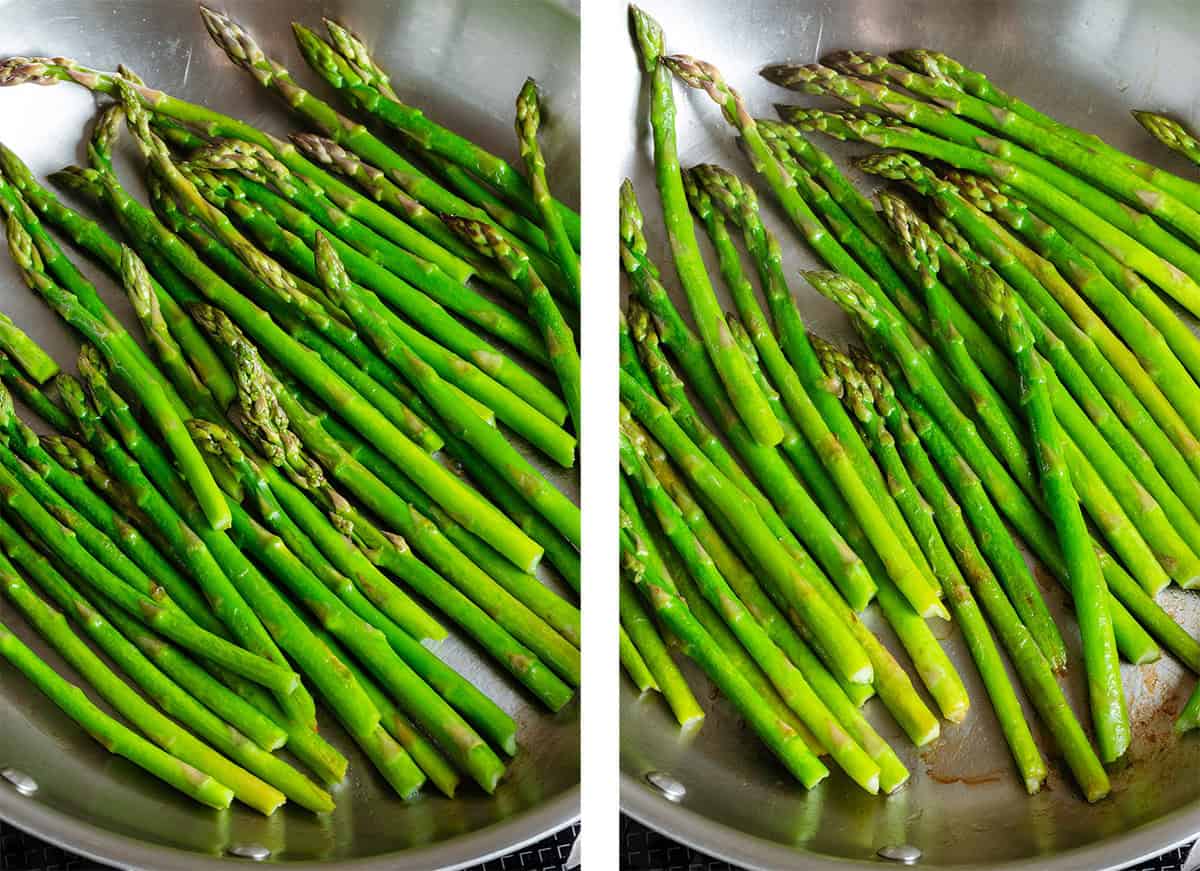
- While the asparagus is cooking, make the glaze.
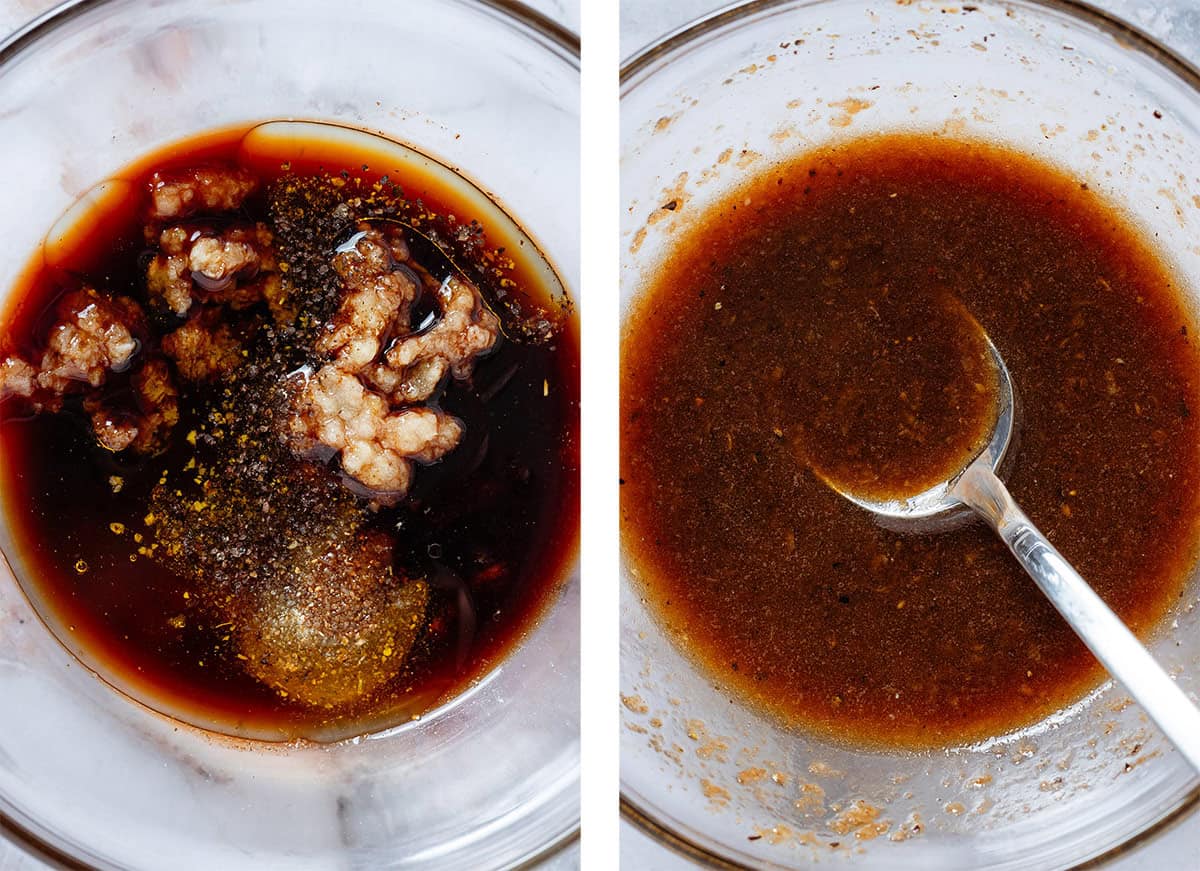
- In a small bowl, combine extra virgin olive oil, balsamic vinegar, honey, grated garlic, sea salt, and black pepper. Whisk to combine.
- In a separate small bowl, mix together tapioca starch and water to create a slurry and whisk it into the sauce.
Would you like to save this recipe?
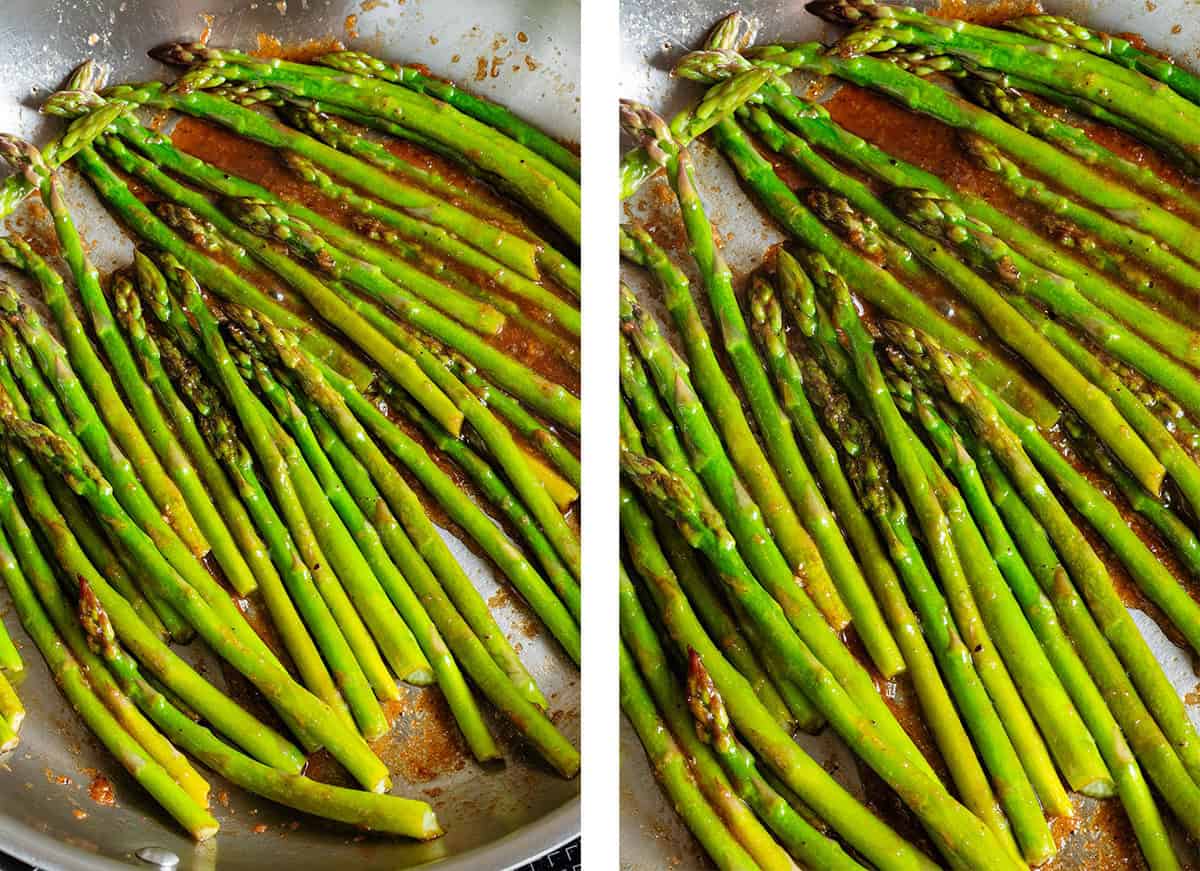
- Deglaze the pan with a splash of hot water again. This cools it down slightly and prevents the sauce from burning.
- Whisk the sauce again to make sure the tapioca hasn’t settled on the bottom, and pour it over the asparagus.
- Cook for 1 more minute on medium-low heat. It will start to thicken immediately.
- Use tongs to toss the asparagus in the sauce as it thickens.
- Serve immediately and enjoy!
Tips & Tricks!
- Snap off the tough ends - The bottom of the asparagus spear is usually tough and hard to chew. Some recipes recommend cutting the ends off, and some even advise peeling them. I've tried the peeling method, and it didn't work for me. When cutting all ends off in the same spot, I ended up with some asparagus that still remained tough, so I highly recommend just snapping them off. It's easy, safe (no knife), and always works!
- Store your asparagus like flowers - To make it last longer, store your fresh asparagus upright in a glass or a jar with 1-2 inches of water in the fridge. If the bottoms look extra dry, cut them off so the asparagus can soak up the water. Change the water every few days, and it will keep it fresh for up to 3 weeks! If your asparagus is slightly wilted, this will help it firm up.
Serving Suggestions
- With chicken, fish, or meat - This is one of those sides you can serve with practically anything. It's delicious with roasted chicken, salmon, shrimp, or steak. In the summer, you can serve it with anything from the grill or along with other veggie dishes and sides.
- Add it to salads or bowls - This is a great way to use up any leftovers you may have. Chop up the refrigerated asparagus and add it to any salad. You can also warm it up and add it to rice or quinoa bowls. Try it in this Asparagus Quinoa Salad or this Caesar Pasta Salad!
Storing and Reheating
Storing: Store any leftovers in an airtight container in the refrigerator for up to 2-3 days. I don't recommend freezing the asparagus.
Reheating: The best way to reheat the asparagus is in a non-stick pan on the stove over medium heat. Add a splash of water to prevent the sauce from burning and cook for about 5 minutes. A microwave also works but I barely ever use it so I recommend the stove. Technically, you could also use the oven but you'd risk the sauce burning.
FAQs
No, while you can store and reheat any leftovers, I recommend cooking the asparagus right before serving for the best texture and flavor. The more you cook the asparagus, the softer it will become so it's usually mushier once reheated.
Technically yes, but you'd be missing out on all the extra flavor from olive oil, honey, fresh garlic, and black pepper!
All that together makes a much more flavorful sauce. I recommend the store-bought version for drizzling on avocado toast, eggs, crostini, and salads when you just want to add a little something extra.
More Asparagus Recipes
If you want to see all the latest asparagus sides, head over to Side Dishes. Below are my favorite four asparagus recipes, including a gnocchi main and a light spring salad that can be both a main or a side!
⭐⭐⭐⭐⭐
Have you tried this Balsamic Glazed Asparagus? Please leave a star rating and let me know how it went in the comments below!
Hungry for more? Subscribe to my Newsletter for a free recipe e-book and new weekly recipes straight to your inbox. Don't forget to follow me on Pinterest and Instagram to always stay in the loop!
Print📖 Recipe
Balsamic Glazed Asparagus
This Balsamic Glazed Asparagus is sauteed in a pan and tossed with the most delicious garlicky honey balsamic sauce! It's so easy to make and goes with practically any meal! It's such a great vegetarian side for spring and summer, and it can easily be made vegan as well.
- Total Time16 minutes
- Yield3-4 1x
- DietVegetarian
Ingredients
- 1 lb asparagus
- ½ tbsp avocado oil
- 1 tbsp extra virgin olive oil
- 2 tbsp balsamic vinegar
- 1 tbsp honey
- 1-2 cloves garlic, grated
- ½ tsp sea salt
- ½ tsp freshly ground black pepper
- ¼ tsp tapioca starch
- ½ tsp water
Instructions
- Snap off the woody ends of the asparagus by holding one at both ends and bending it. It will snap where the woody part stops.
- Add the asparagus and avocado oil to a large pan over medium heat and cook for 5 minutes, tossing occasionally.
- Add a splash of hot water (cold water will make the oil splatter a lot more) and continue cooking for another 5 minutes.
- While it’s cooking, make the glaze.
- In a small bowl, combine extra virgin olive oil, balsamic vinegar, honey, grated garlic, sea salt, and black pepper. Whisk to combine.
- In a separate small bowl, mix together tapioca starch and water to create a slurry and whisk it into the sauce.
- Deglaze the pan with a splash of hot water again. This cools it down slightly and prevents the sauce from burning.
- Whisk the sauce again to make sure the tapioca hasn’t settled on the bottom, and pour it over the asparagus.
- Cook for 1 more minute on medium-low heat. It will start to thicken immediately. Use tongs to toss the asparagus in the sauce as it thickens.
- Serve immediately and enjoy!
Notes
Storing: You can store any leftovers in an airtight container in the fridge for up to 2-3 days. I don’t recommend freezing it.
Reheating: Reheat the asparagus in a pan with a small splash of water for a few minutes or until warmed through.
- Prep Time: 5 mins
- Cook Time: 11 mins
- Category: Sides
- Method: Stovetop
- Cuisine: American
Veronika Sykorova says
This asparagus recipe is inspired by my reader-favorite brussels sprouts recipe and it's just as delicious! If you try it, let me know here in the comments how it went!